




Health is currently one of the fastest-growing categories on Meta — though not quite the single fastest, as it turns out. Two smaller categories technically grow faster on paper, but Health is doing it at real scale, which is arguably more interesting than being #1.
We picked the eight heavy-advertising Health brands in FunnelFox Market Radar data, grabbed each one’s biggest-spending funnel, and poked around: what they’re selling, how they’re advertising it, what clever thing they’re doing, and where the tactics get closer to the line than they should.
Here are the eight big advertisers right now:
| Brand | Ad volume (Jun+Jul) |
|---|---|
| Kure (kureapp.health) | 4,549 |
| Dr. Kegel (kegel-plan.com) | 1,494 |
| Rise (risescience.com) | 1,455 |
| Flo Health | 479 |
| Clever (cognitivegrowth.net) | 317 |
| Reframe | 186 |
| Gyna (gyna.co) | 174 |
| Endel (endel.io) | 102 |
For each of these eight, we pulled the single funnel eating up the most ad spend — the closest thing we have to “where the traffic is actually going”.
TL;DR
Worth borrowing:
- Discount placement (Rise) — parent/caregiver discount sits at the start of the funnel, not as an exit-intent offer; the only case in the set.
- Positive friction (Rise) — an actual reaction-time and memory test instead of more questions, so the result feels performed, not just filled out.
- Real citations inside the funnel (Dr. Kegel, Kure) — PubMed and journal links before the first question, all checkable.
Worth thinking twice about:
- Borrowed authority via unverifiable trust signals — an unlinked star rating, a geo-localized “Top app in [country]” badge, a “Dr.” brand name with no disclosure. Same trick, three forms.
- Doctor distrust as a hook (Gyna) — a direct attack on medical authority, positioning the app as the safer alternative to seeing a doctor.
Patterns in the ad creative:
- AI and scripted “personal” content — a lot of what looks like organic personal testimony (selfie confessions, “my results” screenshots, someone recounting their own story) is actually AI-generated or the same script recast across different people.
- Cartoon/mascot illustration used to soften clinical or scary content — personified test tubes, pills, brain characters, or bedtime mascots deliver real lab numbers, medical terms, or fear-based stats in a cute, non-threatening visual package. The information is serious; the packaging is a children’s-book aesthetic.
- Most funnels mix cartoon and realistic UGC within the same ad set, rather than picking one — soft illustrated infographics running alongside selfie-style “real person” video and fake or real screenshots, testing both registers in parallel instead of committing to a single visual identity.
Now, the eight funnels, one by one.
1. Kure — weight loss through headphones
933 active ads in July 2026
Kure’s pitch is almost too simple: put on headphones, close your eyes, listen, and the weight comes off — no diet, no workouts.
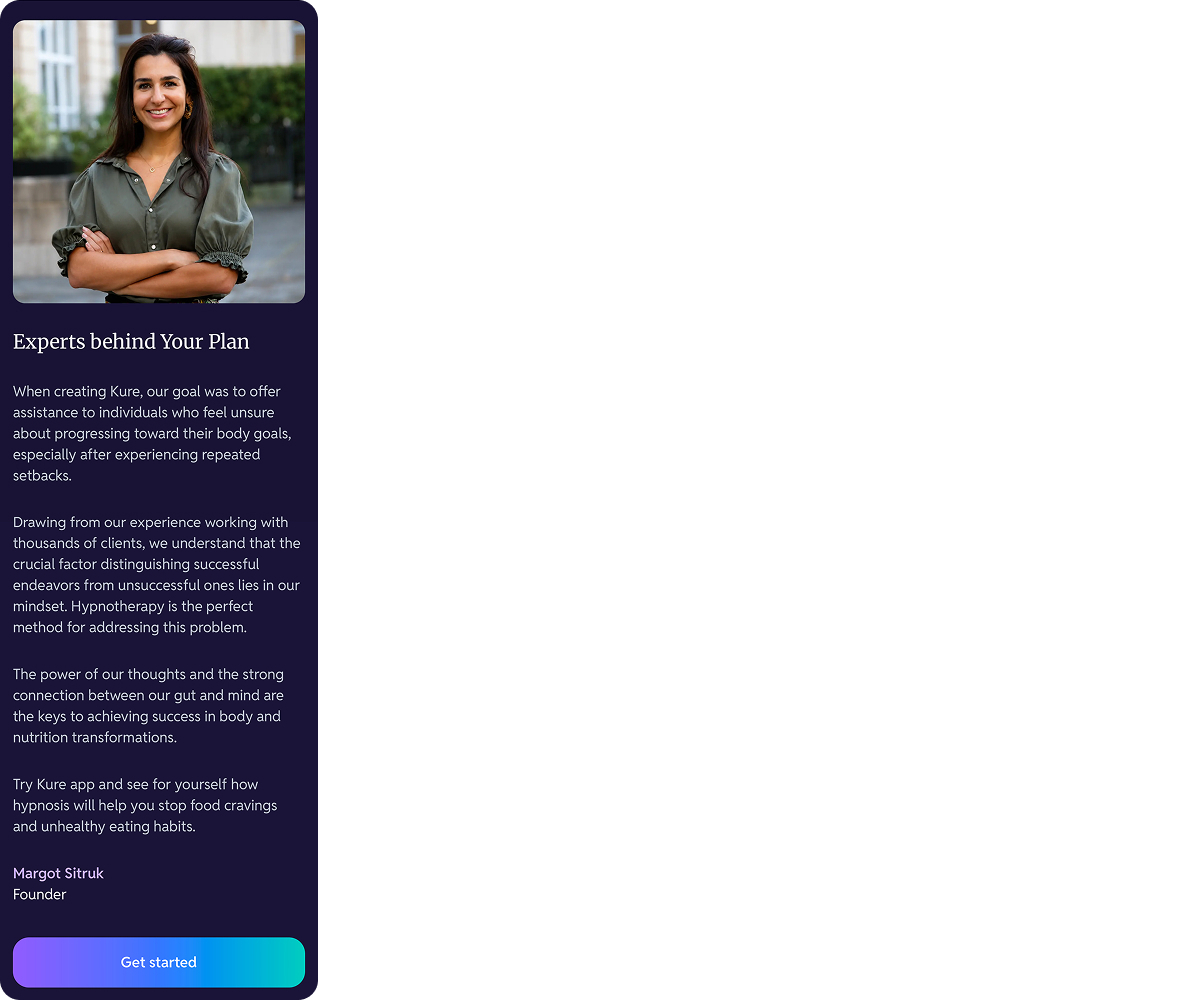
The funnel is built to convert: a calm ASMR tone in the ads (a break from the noisier competitors), a fast quiz with no wasted questions, and a strong move — a real founder, name and photo, right in the funnel (Margot Sitruk), with copy about her own experience and the thinking behind the product. A real person behind the brand is rare; most funnels use anonymous badges or invented personas instead. That builds real trust.
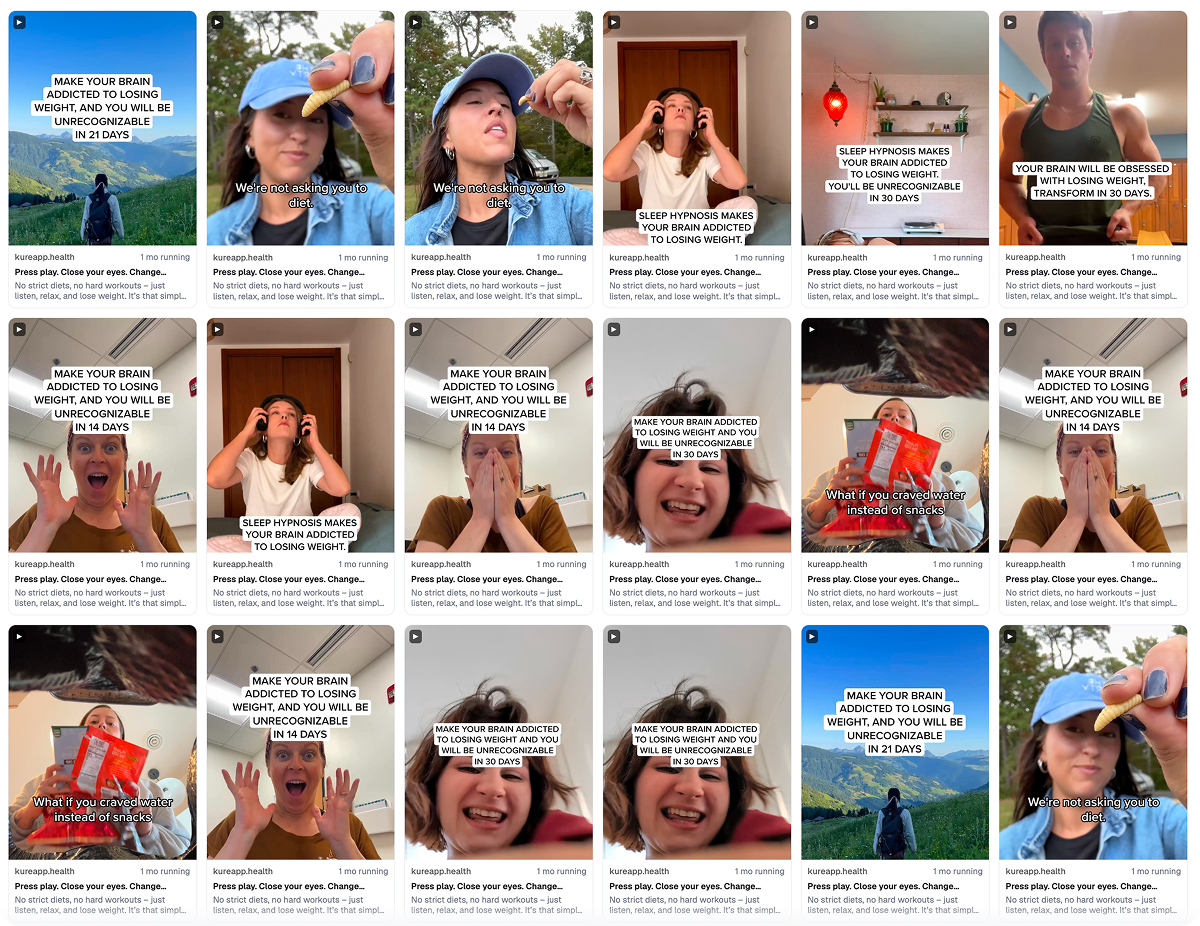
Kure ad creative
All video, UGC-style — home-filmed selfie clips (bedroom, gym, hiking outdoors), not polished models. Same core hook everywhere: “Make your brain addicted to losing weight, and you’ll be unrecognizable in [14/21/30] days” — the day-count changes between versions, likely A/B testing which number converts best.
The hook is decoupled from the pitch. One clip: a woman holds a live mealworm up to the camera — pure scroll-stop, nothing to do with hypnosis. Others: exaggerated shocked reactions, a guy mid-pull-up, a woman reading a nutrition label. The actual product (audio hypnosis) barely shows up until seconds in — the opening frame’s only job is to stop the scroll.
2. Dr. Kegel — the only funnel citing peer-reviewed research
923 active ads in July 2026
A pelvic-floor training plan aimed squarely at erectile function and premature ejaculation.
Before asking a single question, the page lists more than a dozen citations to real peer-reviewed studies on pelvic-floor training, dated and sourced. It’s a small thing that buys a lot of trust.
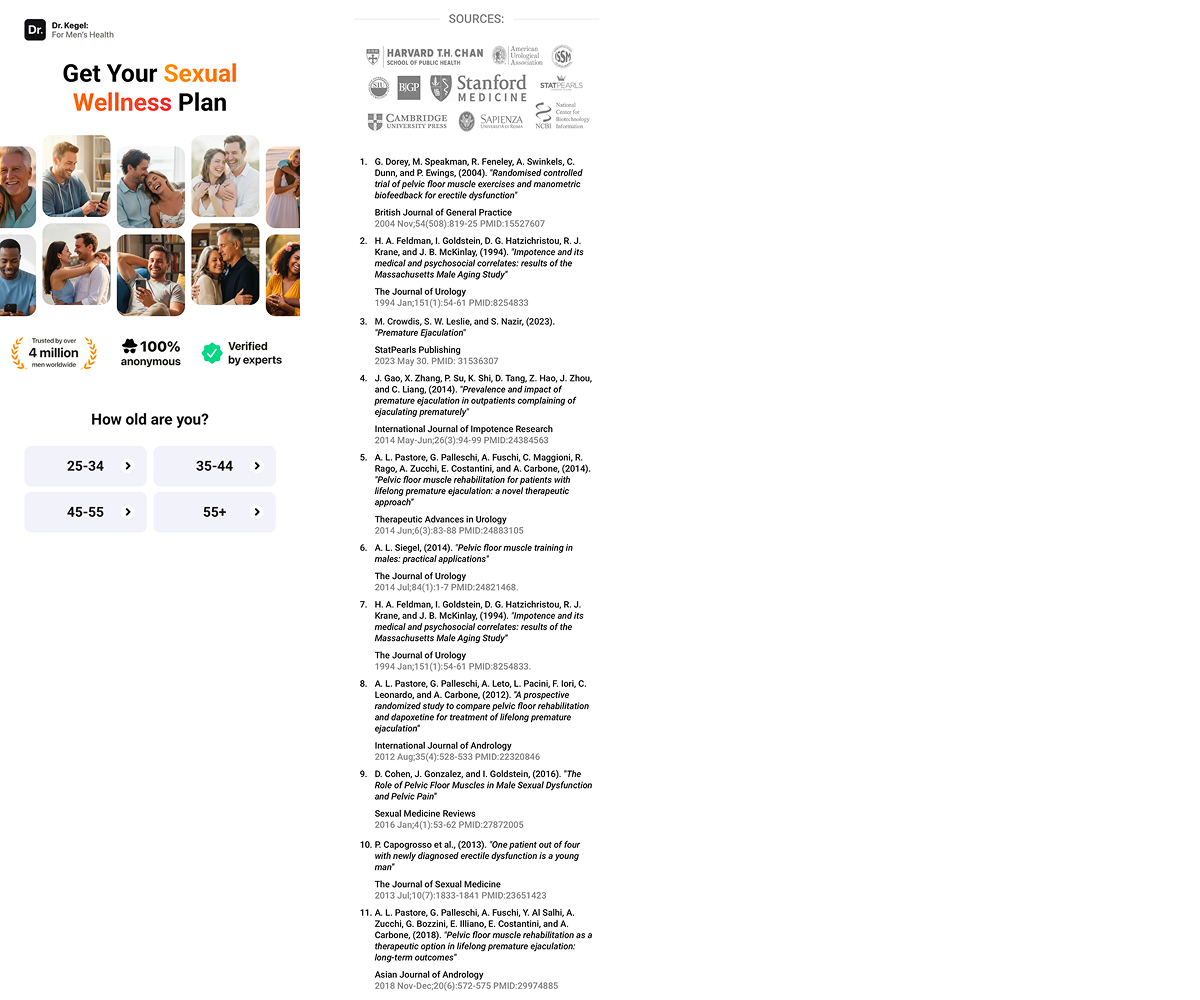
The catch: the studies are real, but the brand name leans on the authority of “Dr.” without saying whether an actual doctor built or reviewed the plan — a softer version of the credential-borrowing that gets brands in trouble once they’re big enough to notice.
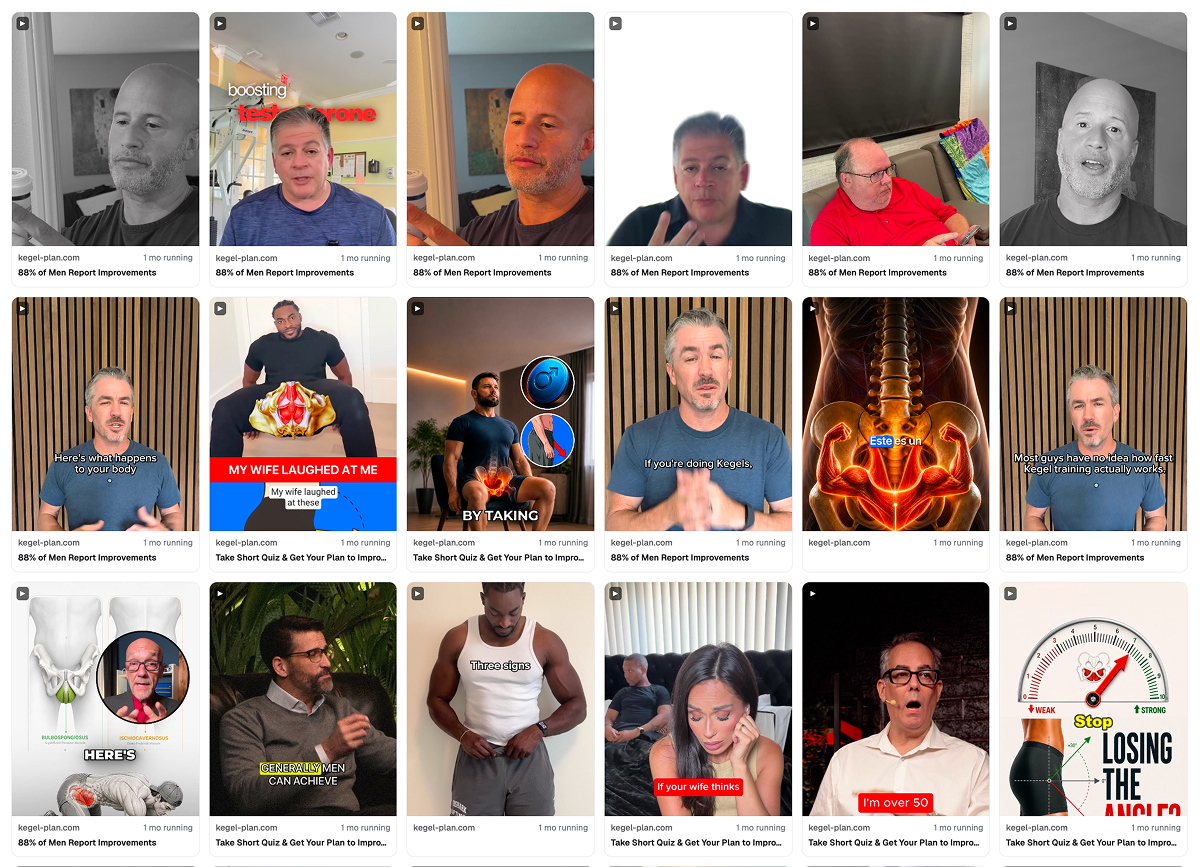
Dr. Kegel ad creative
All video, talking-head style — real-looking men, mostly older, filmed direct-to-camera in living rooms and gyms, not polished actors. One headline dominates almost the whole set: “88% of Men Report Improvements,” reused across a dozen different faces — same unsourced stat, rotating messenger.
Two recurring hooks: humiliation (“MY WIFE LAUGHED AT ME,” “If your wife thinks…”) and fake diagnostics — a gauge graphic running from WEAK to STRONG, “STOP LOSING THE ANGLES,” styled like a real measurement. One creative mixes in Spanish text (“Este es un…”) inside an otherwise English set — same targeting mix-up pattern as Leaply. A second campaign line, “Take Short Quiz & Get Your Plan,” runs in parallel to the 88%-stat version — two different pitches, same brand, same week.
3. Rise — sleep coaching with established credibility
784 active ads in July 2026
An established sleep-science app that’s worked with professional sports teams on athlete recovery — not a new player pretending to have credibility.
Two things stand out once you’re inside the quiz:
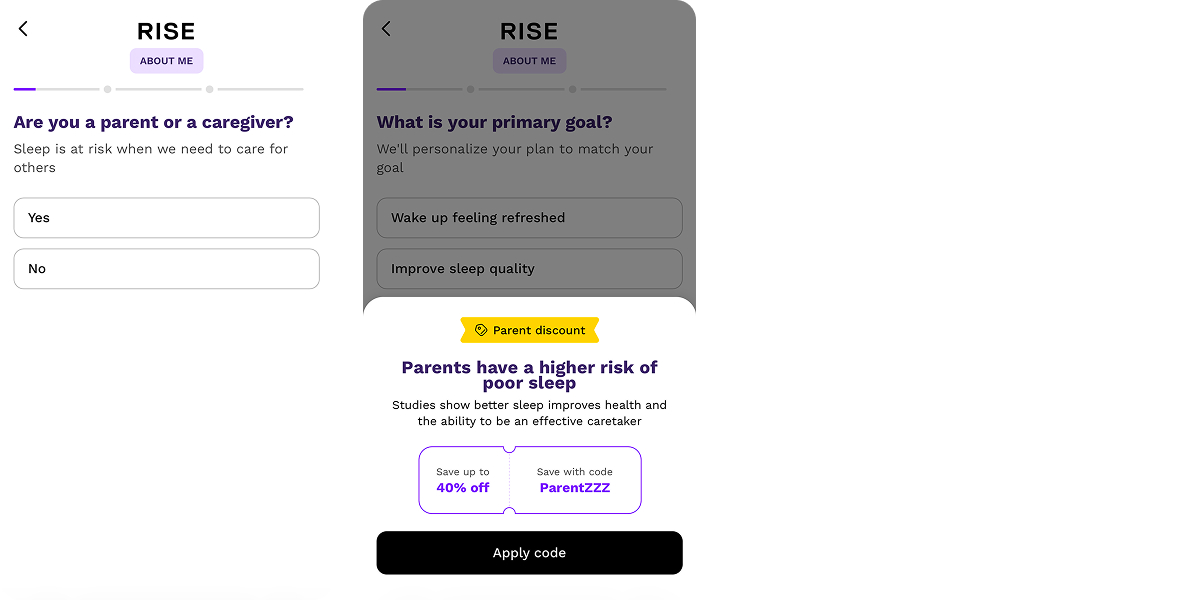
1. Early on — not at the very end, where every other funnel on this list saves its price break — Rise asks whether you’re a parent or caregiver, and if so, offers a discount immediately. Leading with the discount instead of closing with it is a mechanic nothing else in this set does.
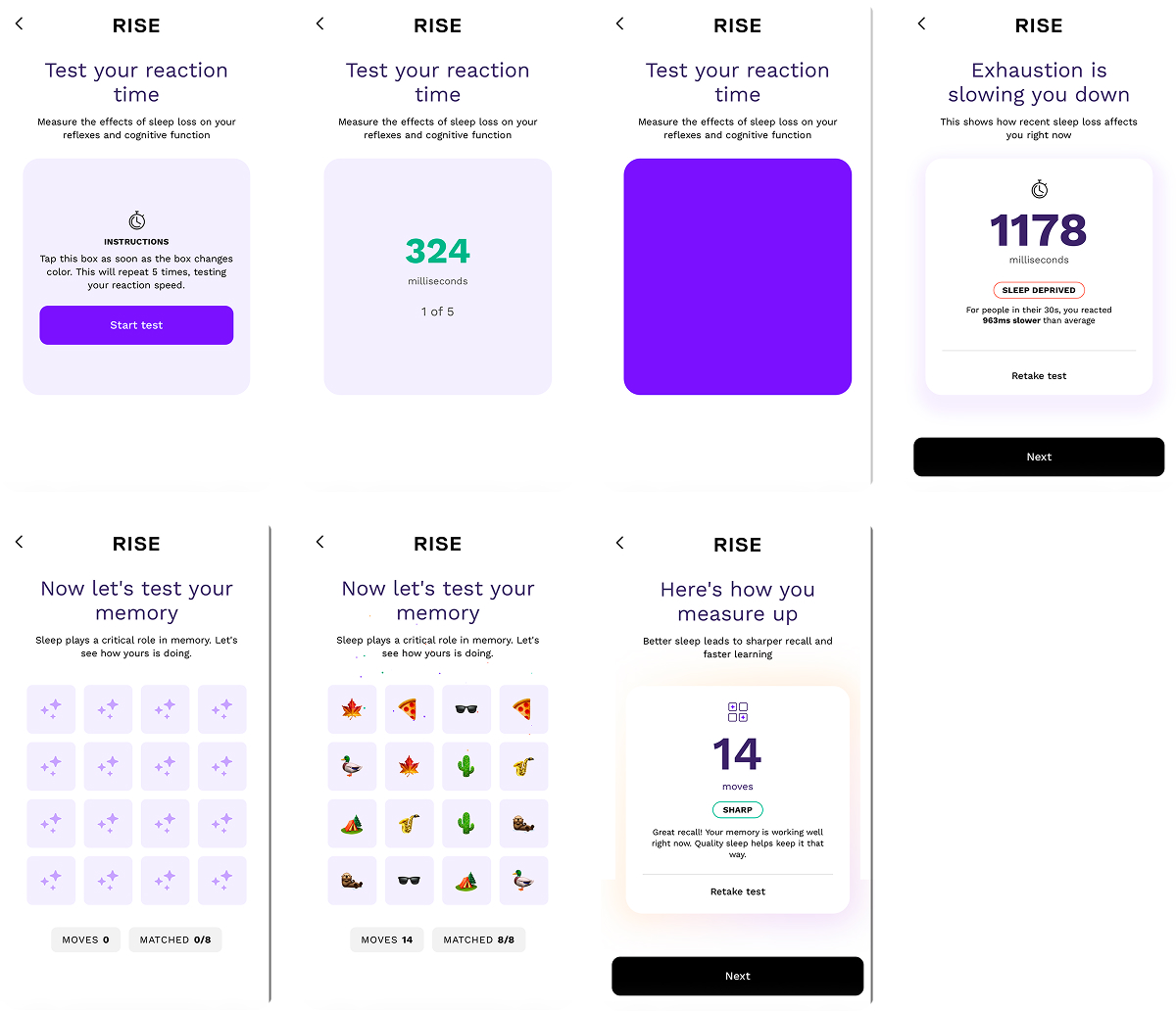
2. The quiz also runs two short “positive friction” moments mid-flow: a reaction-time test and a memory game, both framed as ways to show how sleep is already affecting your cognition before you’ve even seen a result. Slowing the user down with something that feels like a real assessment, instead of another tap-to-continue question, is a more deliberate design choice than most of the quizzes here bother with.
Rise ad creative
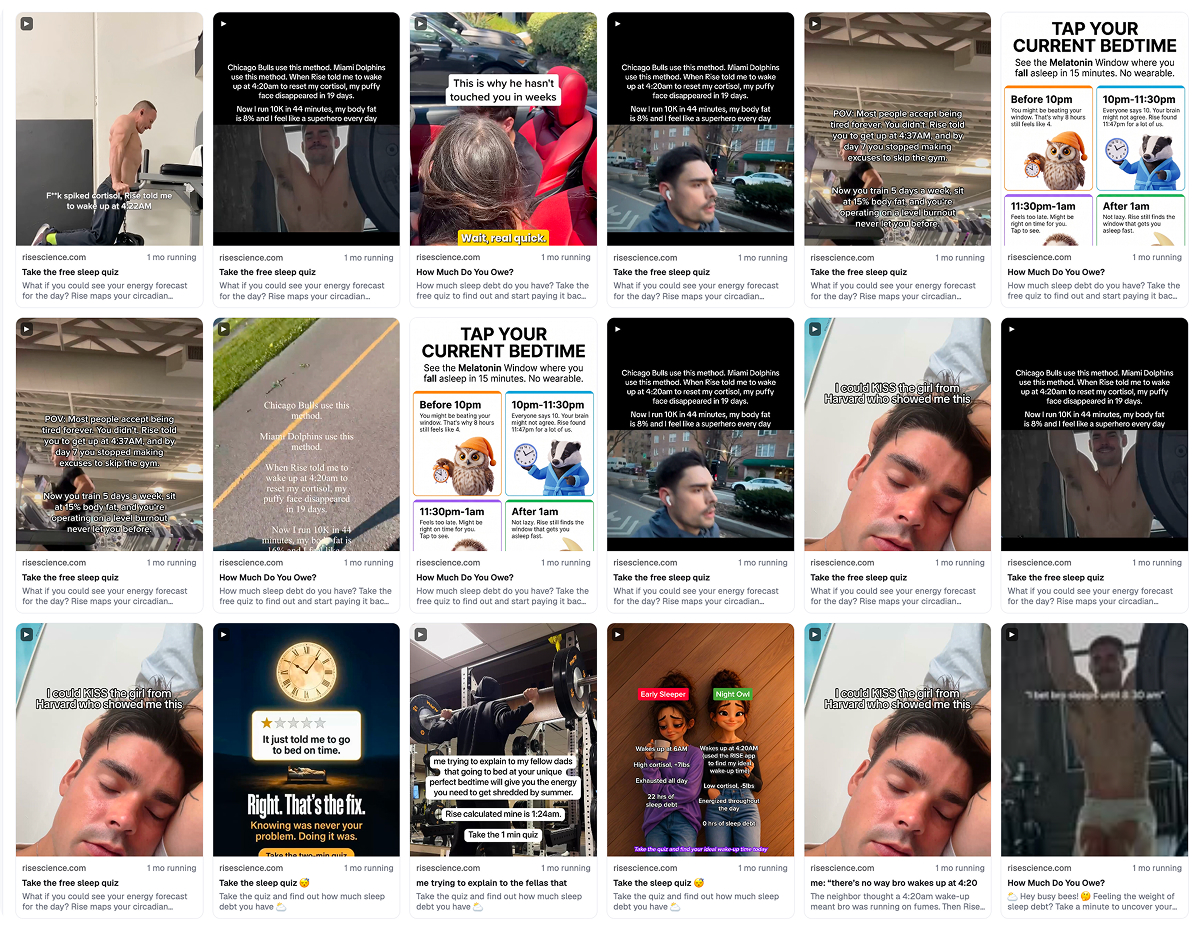
Rise creatives are way more aggressive than their funnels. The rely on heavy UGC/meme format — screenshots, gym selfies, “POV” captions. But it’s not organic: the exact same paragraph — “Chicago Bulls use this method. Miami Dolphins use this method. When Rise told me to wake up at 4:20am to reset my cortisol, my puffy face disappeared in 19 days. Now I run 10K in 44 minutes, my body fat is 8%…” — runs word-for-word across at least five different videos and different people. Same script, recast repeatedly.
Two more tricks:
- Borrowed authority (“Chicago Bulls use this method,” “the girl from Harvard who showed me this”) with no actual citation behind either.
- Fake precision cartoon — Early Sleeper vs. Night Owl, with invented specific numbers (+7lbs vs -5lbs, cortisol levels) presented like a real before/after study.
4. Flo — a trial you get to price yourself
267 active ads in July 2026
Flo is one of the biggest women’s health apps around, tracking cycles, ovulation, and pregnancy planning for millions of people.
The quiz opens with an age-bracket question illustrated by a blooming-flower metaphor — a small bud at 18-25, full bloom at 45+ — then moves into a multi-select goal screen (get pregnant, track pregnancy, track period, understand my body, and more).
What stands out further in: a check-in question asking how you’re feeling about getting pregnant (excited, confident, anxious, lonely), and later a pregnancy-history question with a “prefer not to answer” optio. Also, every screen in Flo’s funnel also carries a visible Skip button — a caring move for a sensitive category like Health.
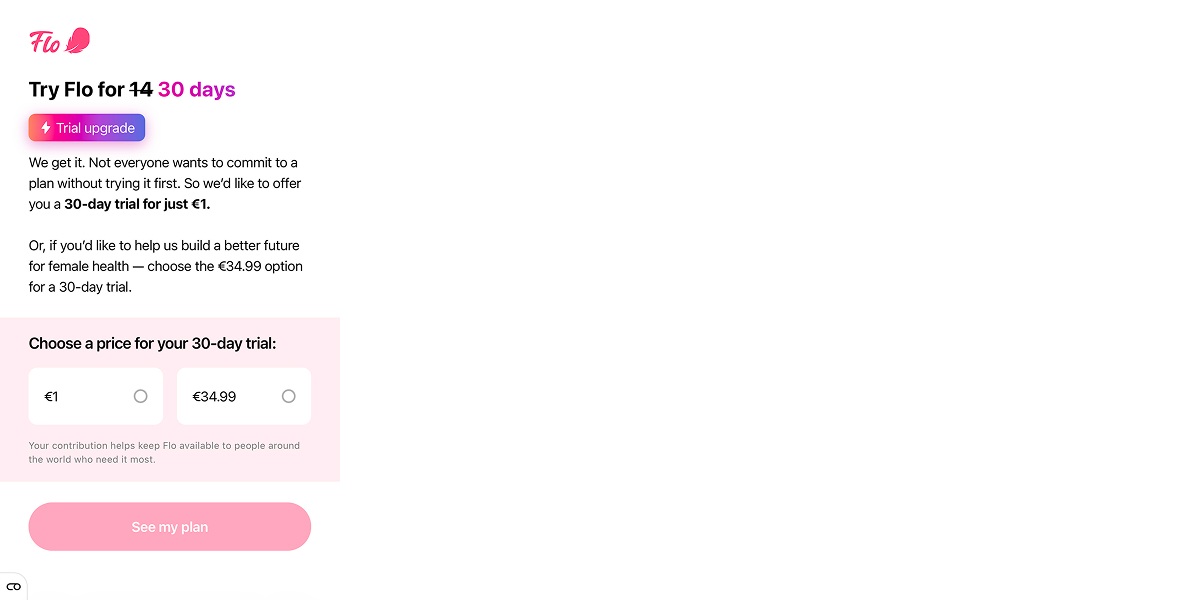
Near the end, Flo lets you pick your own trial price from a short list of options instead of showing one fixed number, a genuinely different move from the flat “$1 today” pricing most trial funnels here default to.
Flo ad creative
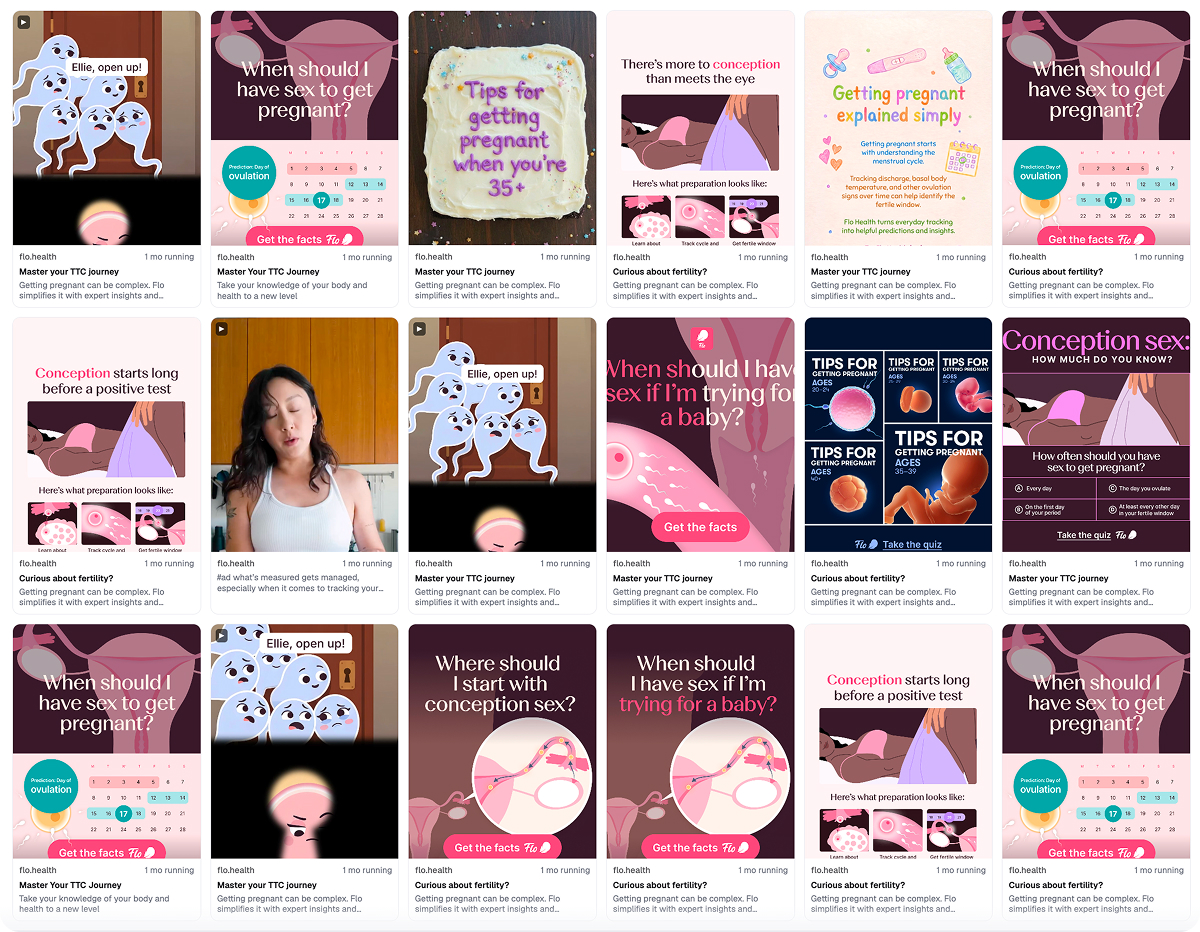
Almost entirely illustrated, not UGC — soft pastel cartoons, anthropomorphized sperm/egg characters (“Ellie, open up!”), calendar graphics, tasteful medical illustrations. No shock hooks, no reaction shots. One creative uses a literal birthday cake with “Tips for getting pregnant when you’re 35+” piped in frosting — a genuinely charming pattern-interrupt, the wholesome version of what Kure does with a mealworm.
One ad stands out for a different reason: a real woman, calm, properly tagged #ad — “what’s measured gets managed, especially when it comes to tracking your…” That’s a disclosed paid partnership, done correctly. Across everything we’ve looked at in this set, this is the only creative with an actual ad-disclosure label on it.
5. Clever (Cognitive Growth) — a quiz that calls its result an IQ score
157 active ads in July 2026
Сategorization note: Clever is officially filed under Health, and its marketing leans hard on dementia and memory-health framing, but the product itself, a consumer IQ-style quiz, sits closer to cognitive edutainment than clinical health.
Clever sells a subscription brain-training program built around a short quiz that scores you on general cognitive ability.
The landing page opens with a country-specific top-app badge that changes based on where you’re browsing from, next to an unverifiable rating figure, then goes straight into a 25-question multiple-choice test before any signup.
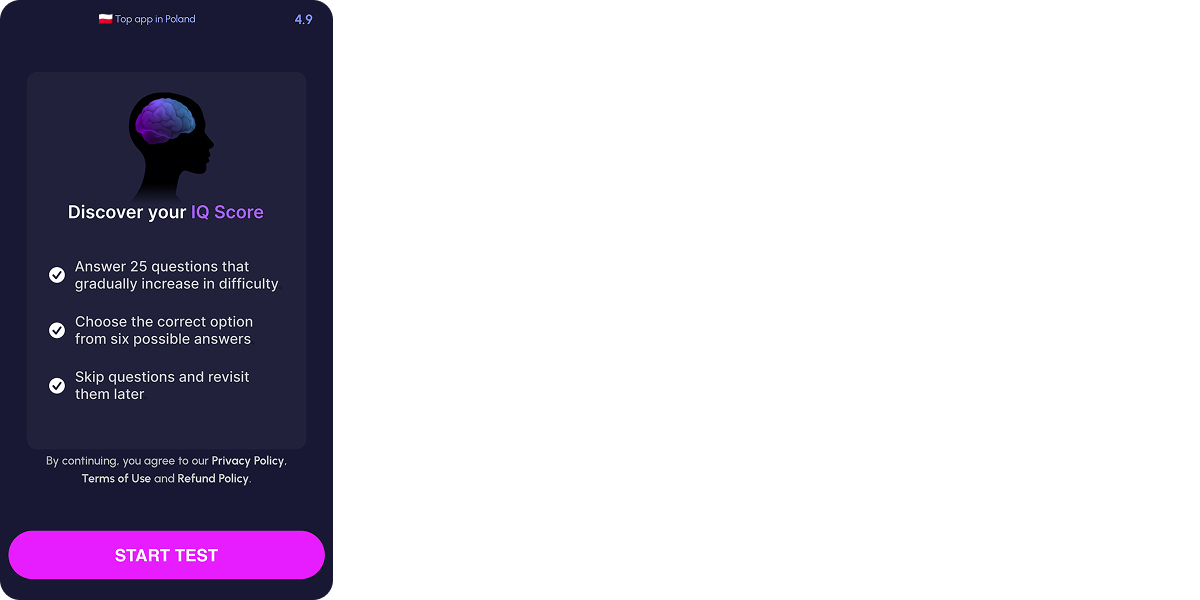
Finish all 25 questions, and you still get nothing for it — the actual score sits fully behind the paywall, no partial result or preview beforehand. Even a rough sneak peek before asking for payment would make the whole thing feel a lot less like a bait-and-switch.
The catch: presenting the quiz result as an IQ score borrows the credibility of a real psychometric test without being a validated one, and leaning on dementia statistics to sell a consumer brain-training app implies a protective effect that hasn’t actually been established for products like this.
Clever ad creative
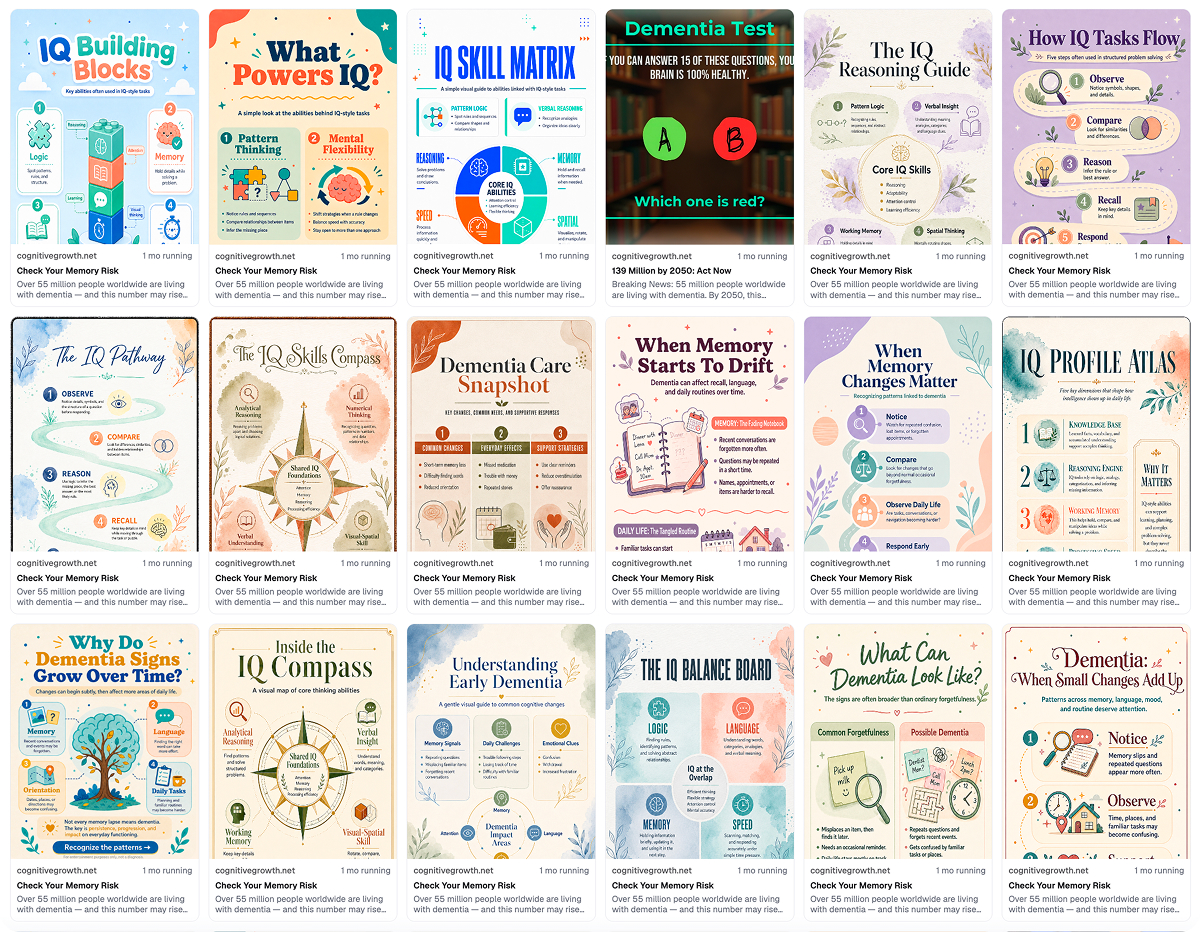
All static infographics, none of the UGC/video style everyone else uses — pastel Pinterest-style graphics with icons, compasses, trees, books. One fear-based caption — “55 million people worldwide are living with dementia” — pasted under almost every image, regardless of what the image is actually about. Even the neutral “IQ Building Blocks” graphic gets the dementia line.
6. Reframe — an established app for cutting back on drinking
60 active ads in July 2026
Reframe is a well-known behavior-change app that helps people reduce or quit drinking, built on cognitive-behavioral and neuroscience-based methods.
The funnel opens with a real, checkable credential — an Apple “App of the Day” badge — instead of the unverifiable star ratings. The first real question doesn’t assume abstinence is the goal: alongside “quit completely” (which branches out of this particular flow toward a different track), it offers “drink less,” “continue a sober lifestyle,” and “take a break” as equally valid answers.
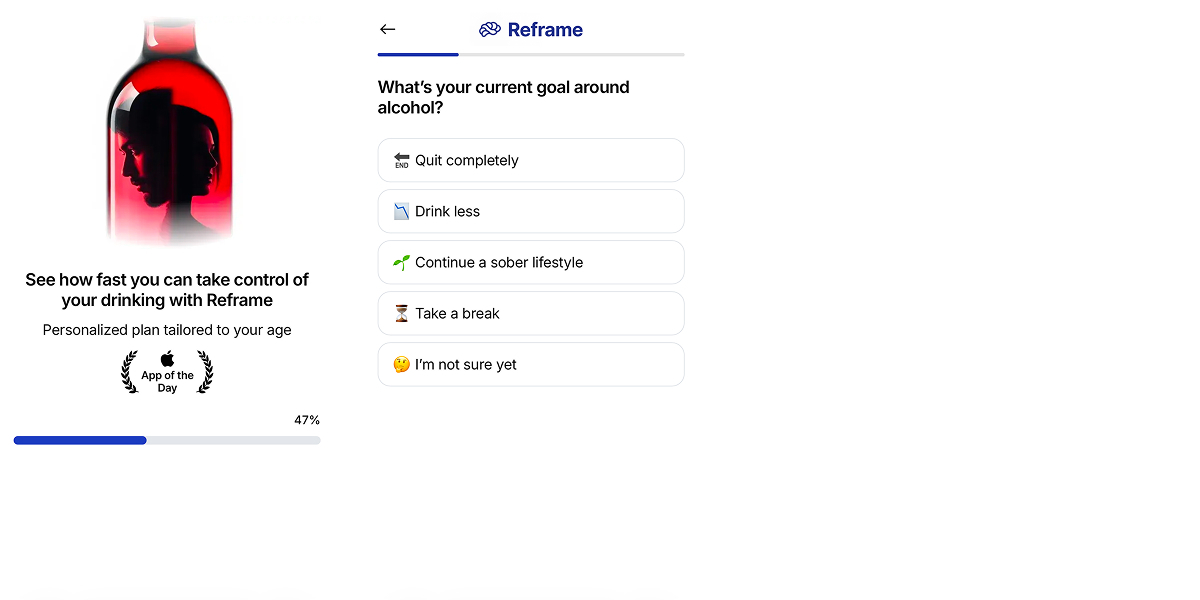
From there, the quiz runs through genuine habit-mapping questions — weekly drinking frequency, how often you buy alcohol for home, how you handle social events where it’s around — phrased closer to a clinical intake form than a marketing quiz. Age-segmented reassurance copy follows each answer (a 30-something sees “millions in their 30s,” for instance) before moving to the next question.
Reframe ad creative
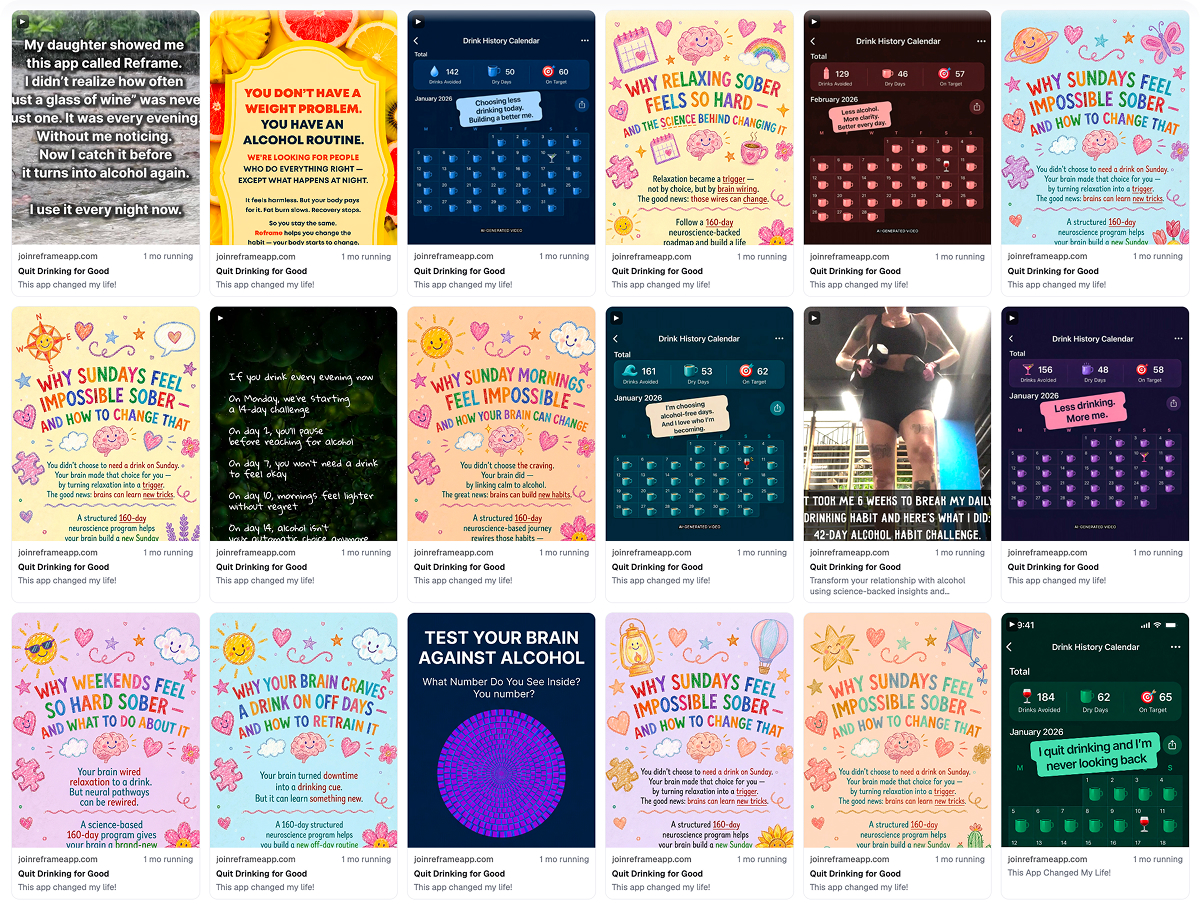
Reframe tests several different emotional registers at once — cute cartoon infographics, fake in-app progress screenshots (tagged AI-generated), personal confession-style quotes, a shame-based diagnosis (“you don’t have a weight problem, you have an alcohol routine”), and an illusion-test gimmick. Not one consistent voice — a broad spread of hooks (shame, curiosity, proof, personal story) tested in parallel to see what lands.
7. Gyna — a fertility quiz that opens by telling you your doctor is wrong
69 active ads in July 2026
Gyna sells a personalized fertility and egg-quality program aimed at women over 38 trying to understand their odds of conceiving.
The headline alone attacks the doctor right away: “Your doctor is wrong about your eggs.” Pick your age, and the next screen doubles down — “Here’s what they didn’t tell you” — reframing egg quality as mostly about diet and “hormonal environment”.
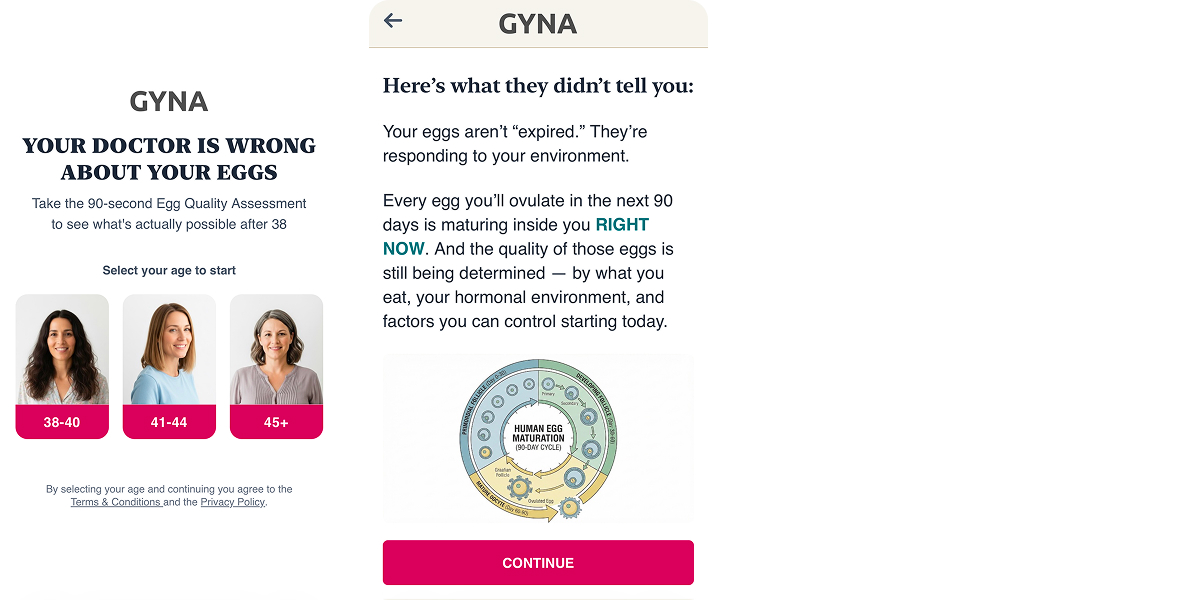
Naming the exact thing a doctor said and calling it wrong is what makes the hook land — and also what makes it more than typical exaggeration.
The catch: age-related decline in egg quality is one of the more settled findings in reproductive medicine. Framing it as something diet and “optimization” can mostly override is a bigger claim than this app can back up.
Gyna ad creative
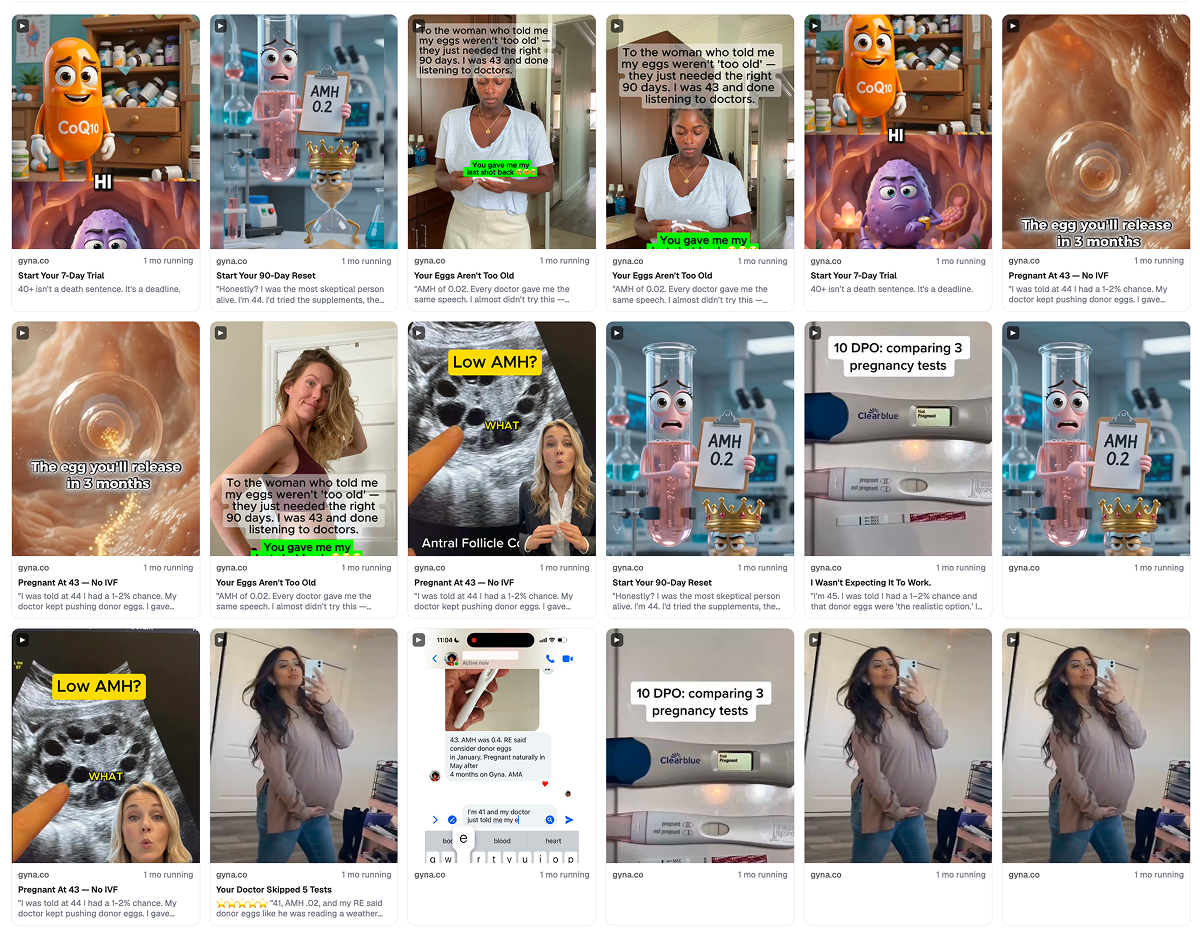
Gyna pairs cute cartoon mascots (a personified CoQ10 supplement pill, a scared test-tube character wearing a crown, holding a clipboard reading “AMH 0.2”) with real, specific clinical numbers and ages — AMH 0.2, “43,” “1-2% chance,” antral follicle counts. Real medical detail delivered through a cartoon, next to UGC-style personal testimonials (text-message screenshots, pregnancy-test photos, belly selfies) built entirely around the same “doctor was wrong” narrative. The specificity is what sells it — this isn’t vague wellness language, it’s real lab values used to make a personal story feel medically credible.
8. Endel — ambient soundscapes marketed for ADHD focus
52 active ads in July 2026
Endel is an established generative-soundscape app — real backing, a Warner Music partnership, years in market — that produces adaptive ambient sound for focus, sleep, and relaxation.
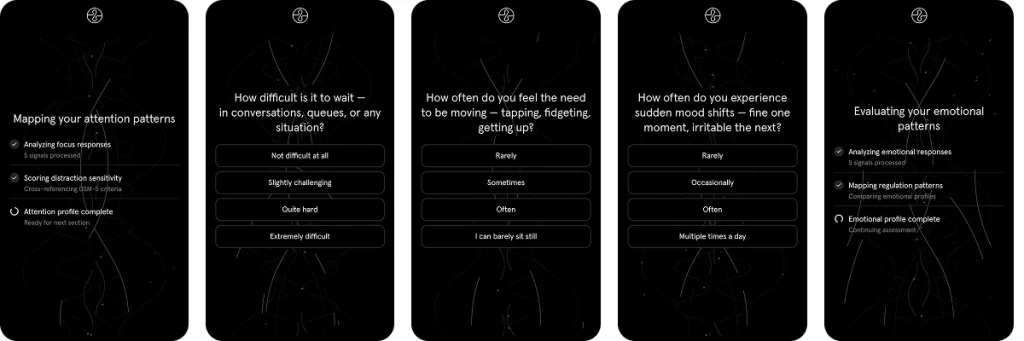
This funnel borrows a real clinical screening format to sell a general wellness product. Its core question — how often you struggle to stay focused on tasks requiring sustained mental effort — reads like an actual ADHD self-report scale, not marketing copy, which lends the pitch a credibility a sound app hasn’t earned: nothing about ambient audio has been shown to treat attention regulation.
The rest is more familiar territory — an inclusive gender question, and a before/after brain-state graphic wrapped in a cartoon mascot, the same claim-through-comparison trick Gyna and Kegel Men use, just with a friendlier face on it.
The catch: dressing up a consumer wellness product in clinical-screening language borrows medical authority the product doesn’t have. It also backs that up with oddly specific, uncited stats on the paywall (7x focus, 3.6x less stress, “developed with sleep scientists”) — the same pattern of precise-sounding numbers with no source. And if you don’t convert, a separate exit screen follows with a crying-cat mascot and a “no strings attached” pitch for a $9.99-a-week plan.
Endel ad creative
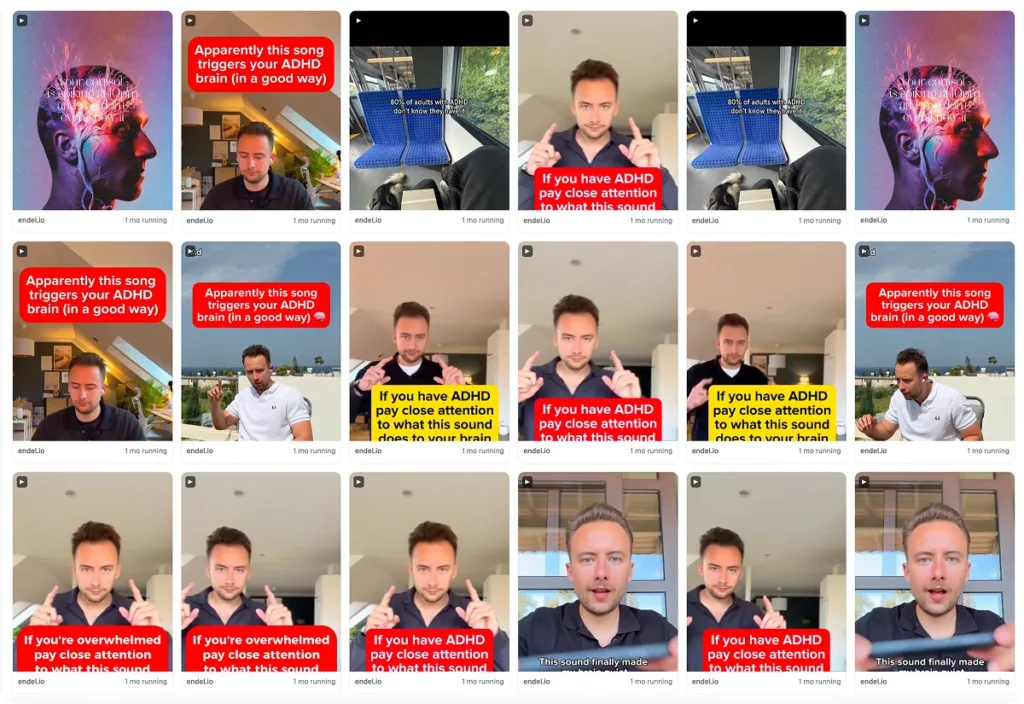
One recurring message — same guy, same pointing gesture, filmed across a train, his apartment, a rooftop — functioning as a personal-authority explainer rather than diverse UGC.
The claim escalates in two steps, treating a specific audio track like it has a targeted neurological effect:
- An unsourced stat to suggest you might be undiagnosed (“80% of adults with ADHD don’t know they have it”);
- Then a specific mechanistic promise that one particular sound “triggers” or “quiets” the ADHD brain.
A note on ad-funnel pairing
“The apps in this research each run hundreds of ads at the same time, and only a small share of those ads were made for the funnels you see here. That matters because a funnel doesn’t perform on its own. The ad creates an expectation, the funnel either picks it up or drops it. The same funnel can convert great with one ad and perform terribly with another. This connection is strongest on the very first screen of the funnel where it’s critical to map the anticipation the ad created with the web funnel landing.
Funnel design matters less than it seems. Most of the difference in performance comes from creatives and targeting, the funnel itself comes third. So treat these teardowns as half of the picture, and if you want to learn from a competitor, reconstruct the pairs: which ad leads into which funnel. That combination is what performs, not either piece on its own.”

Wrap-up
Three things stand out across all eight:
- The strongest funnel decisions here aren’t always the most polished ones: a discount shown at the right moment, a quiz that runs an actual test before giving a result, a real citation on the page, all do more for a funnel than clever design alone.
- Borrowing authority is close to universal — doctors, precise-sounding numbers, country badges, sports team names all show up as credibility shortcuts, some backed by something real and some not.
- And “personal” content is getting harder to tell from manufactured content: the same testimonial script runs across different faces, and a cartoon can deliver a real lab number without it reading as clinical.
FunnelFox Market Radar is the tool behind this piece: a market intelligence platform that tracks apps’ Meta ad activity, creatives, and funnels in one place.
For Health, that took us from a category-level growth signal all the way down to eight specific funnels, their acquisition angles, pricing mechanics, creative patterns, and the claims sitting inside the funnel.
Want to know exactly what your competitors are spending on? See FunnelFox Market Radar.