






In 2026, traffic volume alone no longer decides which apps grow. The teams pulling ahead are the ones that got better at converting traffic, not just buying it.
To dig into what that looks like in practice, we brought together six experts across acquisition and monetization:
- Shamanth Rao — CEO, RocketShip HQ
- Mike Gadd — VP Customer Success, Singular
- Andrey Shakhtin — CEO & Co-Founder, FunnelFox
- Elise Zareie — Head of Paid Social, Lingokids
- Patrick Stuart-Constant — CEO, Sociaaal
- Jacob Rushfinn — CEO & Co-Founder, Botsi
This is a recap of their conversation — where the market shifted over the last year, how to build a converting web funnel, how to make sense of data from five different sources at once, and how to make sure your UA team is optimizing for revenue rather than installs.
Buying traffic is no longer enough: What changed in the last 12 months
Over the last year, three things changed at once, and they compound each other.
1. Renewals over installs
Most teams are still measuring success by installs and trial volume. But the bottleneck has moved.
Users are cutting back on subscriptions — not adding new ones, consolidating and cancelling. The first renewal is where growth is won or lost now, not the first conversion.
2. Web over stores
That pressure pushed a lot of teams toward web. 82% of top grossing apps now route payments outside the App Store, up sharply from a year ago. This is driven by:
- Attribution — no ATT restrictions on web, pixels and Conversion API work freely. Purchase signals come in immediately, campaigns optimize faster and on less budget.
- Conversion — the flow from ad to purchase is seamless, with no app install step breaking the journey. A user clicks an ad and keeps going — quiz onboarding, purchase, and only after that comes the install.
- Commission — 2.5% to a payment provider instead of 30% to the App Store.
3. Real personalization
Dynamic paywalls, different offers for different users, personalized experiences post-paywall — this used to be something only the largest apps could pull off. The tools are now there for everyone.
“Personalization from the first touch point all the way deeper into the experience makes a big difference.”

The new economics of creative production
With more channels, more formats, and more pressure to find what works before burning budget, the way teams approach creative has had to change, too.
Finding what converts takes more attempts than before
The classic starting point still holds: look at what’s working for competitors in your vertical, find the winning formats in Meta Ad Library, and adapt them to your messaging. Audience shapes format — older users convert better on statics, younger audiences on Reels and organic-looking video. Early on, leading with a specific persona and a specific problem tends to work better than listing all your product’s benefits.
What’s newer this year is teams sourcing creative direction straight from TikTok creators and letting them drive the ideas:
“It’s fresher when the audience itself imagines how to sell your app.”

As you scale, the mental model shifts. Think about creatives as a search space — the goal is to cover as much of it as possible, not produce variations of the same thing.
“You don’t want endless variations of the same creative. Otherwise you’re always in the same little spot.”

When something works, explore that area deeply with variations. In parallel, keep prospecting new angles so when a winning concept runs out, the next one is already ready. Patrick Stuart-Constant at Sociaaal is at 4,000 video ads a month and heading to 10,000, doing exactly this.
AI made creative cheaper, but it didn’t make it easier
The Jevons paradox applies here: the cheaper production gets, the more of it you consume. Patrick’s company, Sociaaal, doubled in size over the last few months; the creative team tripled. RocketShip HQ saw the same — the creative team grew 2x alongside increased output.
AI handles the repeatable work well: resizing, localization, B-roll, copy drafts. It’s also become genuinely useful for creative analysis — understanding what’s working across large volumes, findign blind spots, speeding up feedback cycles between strategists and designers.
But original concepts still require a human:
“Ads that are truly creative and original, with fresh ideas and new concepts in the search space, perform really well. So we’ve needed much more human creativity as we’ve scaled up.”
“Everyone can make a thousand statics with AI now. But what feels human? What will convert and sell your app? That’s where you need the human eye.”
And fully autonomous ad creation still isn’t here:
“I’ve seen a lot of people say, ‘This makes ads completely autonomously,’ and their results are not great. You still need the taste to understand what to actually run.”

Creative teams aren’t shrinking; the workload is shifting away from execution, toward direction. And the best ideas still come from unexpected places.
Patrick’s team took inspiration from Liquid Death — a brand with no connection to their vertical — and adapted their approach of reacting to user comments with humor. It performed well for months. Elise took negative comments calling an AI app a “spy” and turned them into a skit with creators dressed as James Bond characters. The ad drove strong cost-per-trial and significant organic sharing.
“The idea of taking negative comments and turning them into hooks, doing social listening, and being aware of what people say about your app, that’s something AI can help execute, but not come up with.”
How to design the post-click path for revenue
The shift to web is real, but for some teams, it’s just not the right move yet.
The learning phase is expensive — you need to be comfortable spending on paid ads while you’re testing and optimizing, without expecting profitability in the first few months. If your growth is mostly organic, the pressure to move fast is lower. The question to ask honestly is whether you have enough paid marketing scale to sustain that learning period.
If the answer is yes, the next question is how. Web funnels have more failure points than in-app flows — creative, landing pages, sign-up flow, campaign configuration. Any of these can hurt conversion. The teams that make it work usually do these four things:
1. They troubleshoot everything themselves. When something isn’t working, the temptation is to hand it off. The teams that make web funnels work stay with the problem: they go through every part of the flow until they find what’s broken and fix it.
2. They constantly iterate. A web funnel has three levers: who you’re targeting, how you’re telling the story, and how you’re monetizing. The goal is to find the right combination for the right user segments and get there as fast as possible.
The more experiments a team runs, and the faster they run them, the higher the probability of revenue growth.
“There’s a strong correlation between revenue and the number and pace of experiments. The quicker and more a team iterates, the higher the probability they’ll grow their revenue.”

3. They learn to sell the product differently. Moving from app to web means losing the product itself as a selling tool. On the web, you’re directing people toward an app they haven’t used yet, so the funnel has to do the selling.
“In your app, you can easily show the value and the aha moment because it’s the product. But on the web, you’re often still directing people into the app. So how do you sell the product well? Look at what’s working for competitors, copy it to start, then differentiate and iterate.”
4. They set up measurement before scaling spend. Running web ads without knowing where users come from and where they drop off means you can’t tell what’s working. Get measurement right first, then scale.
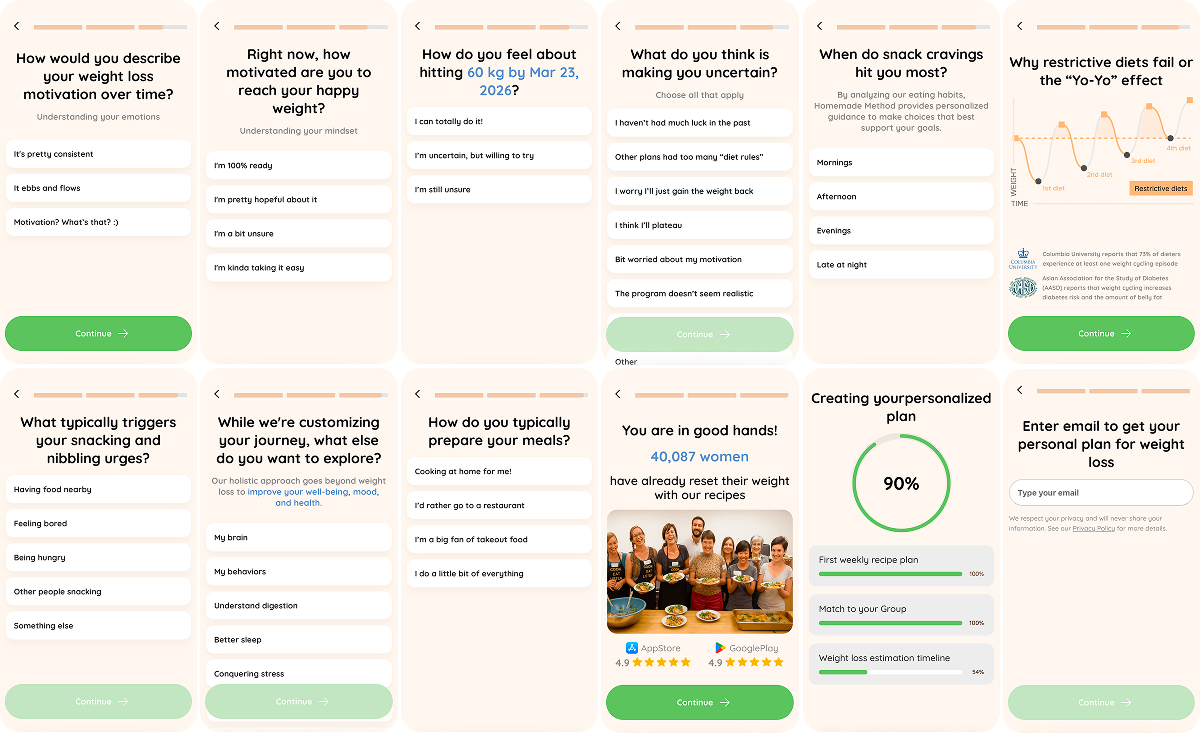
One more thing teams tend to overthink: funnel length. Vertical matters far more than the number of screens. Health and fitness tend to support longer funnels; kids’ apps and entertainment go the other way. Start with 10–15 screens and iterate from there.
And don’t underestimate payments. Web payments are a completely different world from the App Store. Refunds, chargebacks, payment acceptance rate optimization — it’s a rabbit hole that’s easy to miss at the start, and it has an outsized impact on conversion rate and funnel performance. This is not the place to DIY.
💡 FunnelFox Billing handles the web payments infrastructure end-to-end — smart routing across 60+ providers, automatic retries and payment cascading to recover failed transactions, and provider-level tokenization so your billing continuity doesn’t depend on any single provider. One stack, no lock-in. See how it works.
How to make spending decisions across conflicting data sources
Moving payments to the web means you’re now looking at data from two different worlds — app and web — and they don’t speak the same language. Your MMP shows one number, Meta shows another, SKAdNetwork adds a third. None of them will ever fully agree, and trying to make them match is a waste of time.
The way out is to pick one source of truth and stick with it.
Most teams use their MMP — it’s the most impartial view across channels and platforms. Optimize off that and use everything else as a directional check. If your MMP and your ad networks are trending in wildly different directions, something is wrong; if they’re roughly aligned, you’re probably fine.
“Don’t try to make everything match. You’re just going to give yourself a really big headache. Decide what your source of truth is and optimize off the back of that. Use the other sources as a check.”

SKAdNetwork is worth keeping around, too. A lot of teams write it off, but it’s still a useful impartial check on overall accuracy.
Two things make this harder than it needs to be:
- Sometimes teams can’t reconcile their ad spend with the revenue source — the data lives in different places, and no one has connected them.
- Without a strong User ID implementation, you’re seeing the same user as two different devices — one on web, one on app — and you can’t match them.
“If you have a strong User ID, you can knit all these things together and measure everything in a total view.”
One more thing to watch: proxy metrics. Within a single funnel, conversion rate can vary 10x depending on the creative — one ad at 3%, another at 10%. CPM and conversion rate alone won’t tell you what’s working; focus on ROAS and tie it back to actual revenue.
How UA teams can own the full funnel, not just the top
UA teams typically see what happens at the top of the funnel — clicks, installs, trial starts. What happens after that is rarely visible from the same dashboard. But that’s where the revenue is made.
The starting point is showing the whole team how acquisition quality connects to revenue.
When activation rates go up, renewals follow. When they drop, revenue drops later. Quantifying that relationship even roughly changes how product, monetization, and acquisition teams talk to each other.
Track user quality, not just volume. Look at campaign performance on a cohorted basis (new cohorts of users coming in weekly). In those same cohort charts, track activation rate, day-1 and day-7 retention, and trial cancellations.
“Sophisticated teams don’t only think about whether users converted on a trial. They think about the quality of the cohort over time, LTV, and renewal rates. Hitting ROAS targets isn’t enough.”
Tie campaign data to downstream events. Connect campaign data to attribution and event data so your UA team can see what their campaigns are producing. If they can’t see it, they can’t optimize for it.
Use Ads Manager as a directional signal. Run monthly health checks at the creative level: does what Ads Manager reports match the quality of users getting into the app? Trends matter more than absolute numbers, especially after a significant creative shift.
“We’ve seen creatives doing really well based on cost per trial, but the quality of the audience is terrible and downstream retention is terrible. That’s something you definitely want to watch out for.”
4 Quick wins on paywalls and pricing
1. Introductory offers are the most common lever on the web right now — a discount on the first billing cycle, full price from the second month.
2. Multi-page paywalls — breaking the value proposition across multiple screens — have been a consistent win. The Blinkist-style approach is a good reference point.
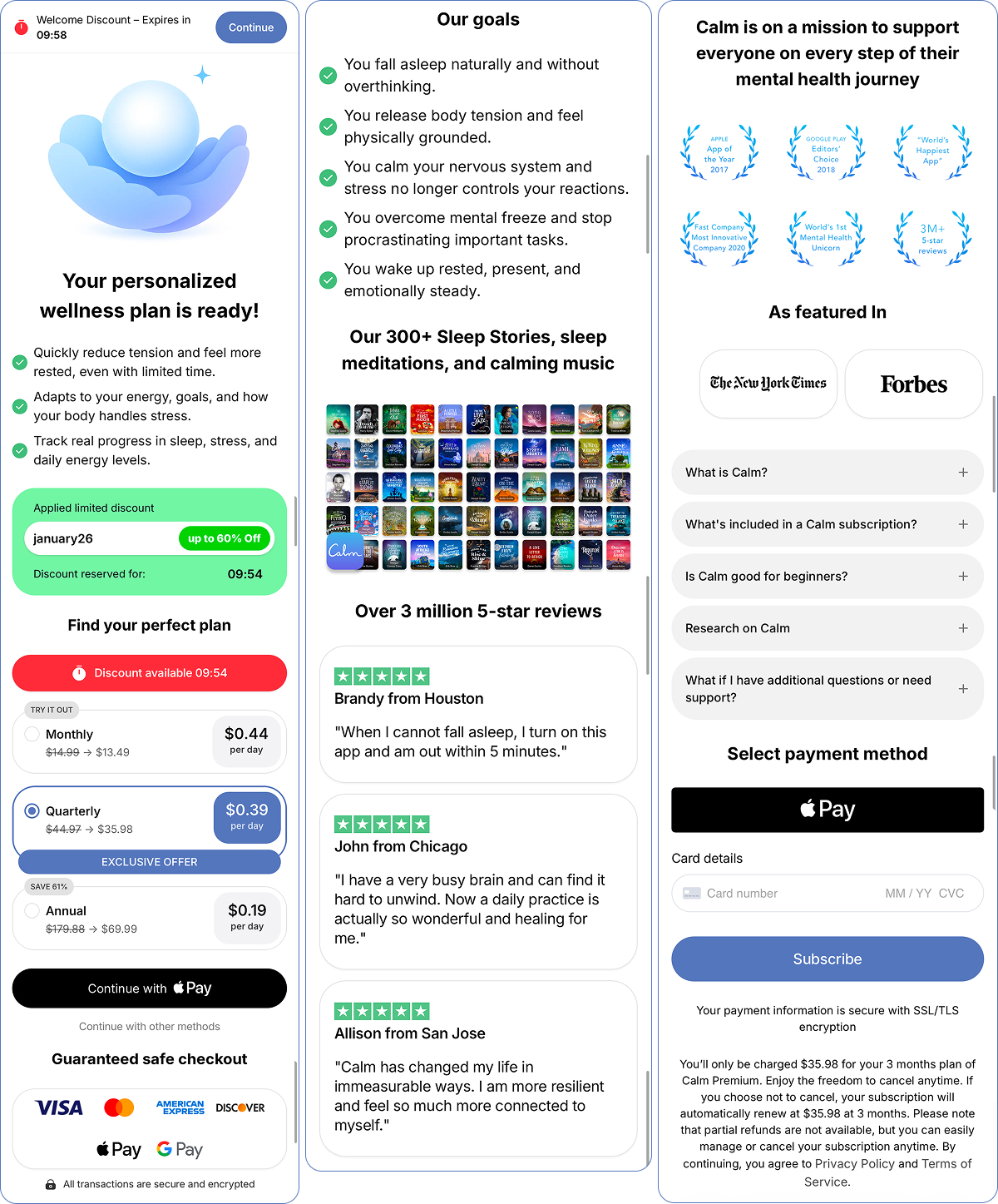
3. Showing all plans on one screen drives more annual subscriptions than showing only the annual plan.
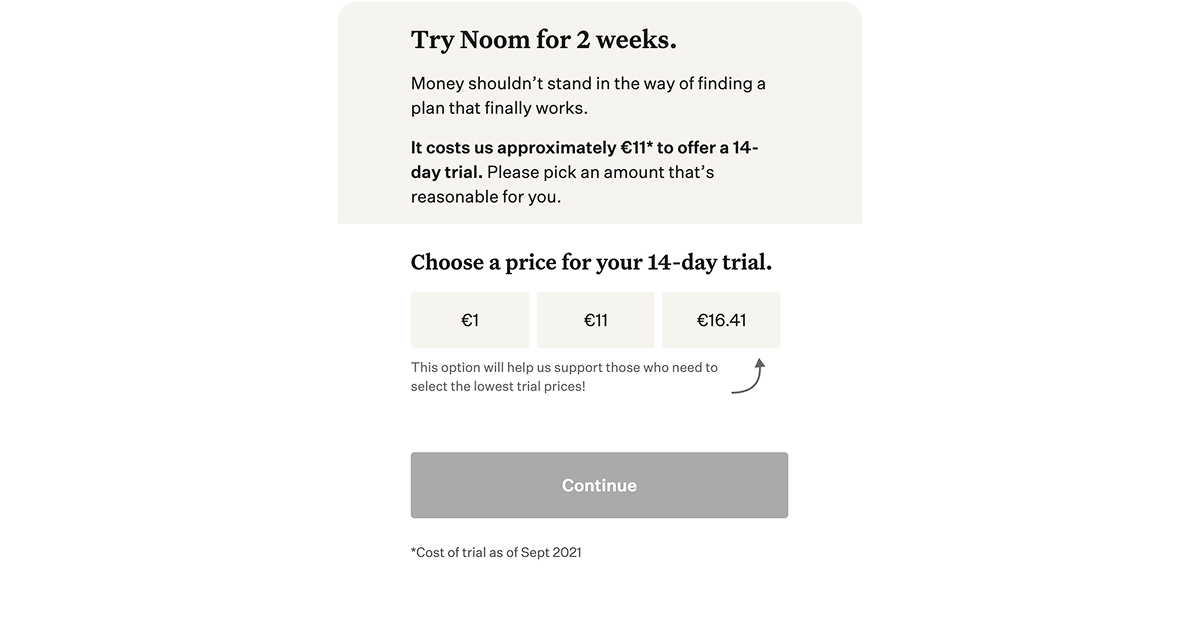
4. Paid trials are gaining traction — an annual plan with a 7-day trial, or a 30-day trial around $4.
Final advice for teams scaling UA
Scaling user acquisition means a lot of things breaking at once. Here’s how to keep it together from the people doing it.
Get your measurement stack in place before you scale, not after. If you can’t tie campaign data to downstream events, you’re spending money you can’t account for.
Diversify your channels early. Meta, TikTok, Google, web2app, landing page, in-app — these reach different audiences. Tap all of them simultaneously.
Focus on ARPU, not just volume. A 10% increase in ARPU can translate to a 50% increase in your margin for scaling ads.
“People underestimate the power of increasing ARPU. If you increase monetization, you can spend more and scale further.”
Scale the team alongside the output, both the number of ads and the number of people producing them. The creativity has to scale too.
“Scale both the number of ads you’re producing and the size of your creative team. Inject real creativity into the process, and scale their salaries too.”
And if you’re building web funnels, give it a dedicated owner inside your UA team. The tools are there. What makes the difference is one person or one team that owns it end-to-end and builds a roadmap around it.
“You need one person or one team that really owns it, scales it, and builds a specific roadmap. Otherwise, it’s just not going to work.”
Watch the full webinar recording below.